
What Is Customer Churn, and What Is It Really Costing Your Business?
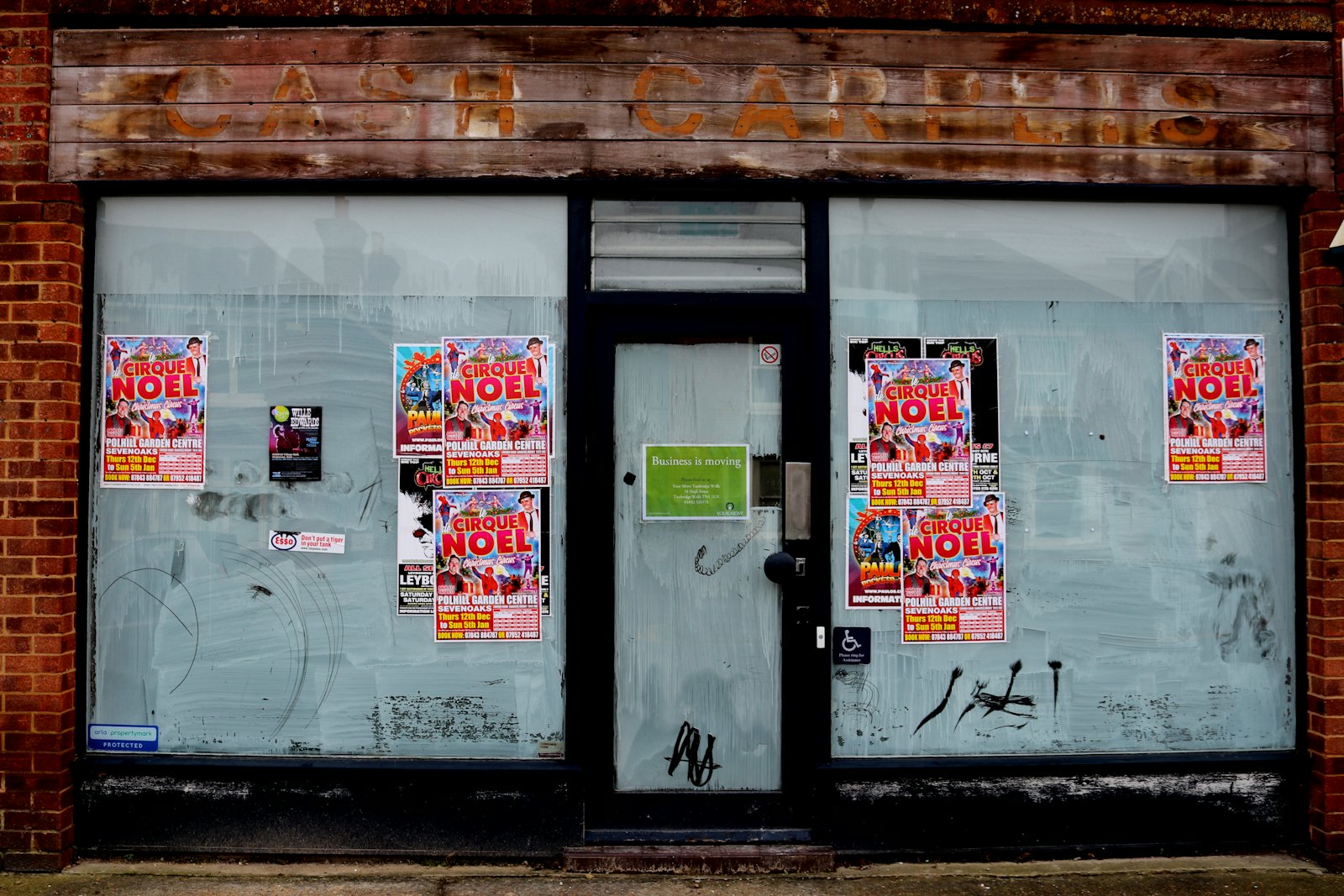
You’re scrolling through last year’s invoices looking for something else, and a name stops you. A client who used to order every month, reliably, for three years. The last invoice is from April. Nobody cancelled anything. Nobody noticed. And when you add up what that one account used to spend, the number is bigger than your best new deal this quarter.
That’s customer churn, and most small businesses underestimate it because they only ever see a small part of it. This guide answers the basic question of what is customer churn, shows you how to define and measure it properly for your kind of business, and then does the uncomfortable sum: what it really costs once you count everything that walks out the door with the customer.
What is customer churn?
Customer churn is the rate at which customers stop doing business with you over a given period. If you had 200 customers on 1 March and six of them were gone by 31 March, your monthly churn rate is 3%.
Simple enough. The trouble is the word “gone”. A gym member who cancels a debit order has clearly churned. But what about a restaurant regular who hasn’t been in for two months? A B2B client who still pays the retainer but has halved the scope? A patient who hasn’t rebooked since winter? Each business has to decide what “gone” means before the number is worth anything.
The different types of customer churn
Churn isn’t one thing. Splitting it into types shows you where the money is leaking and what kind of fix it needs.
| Type | What it looks like | Typical cause |
|---|---|---|
| Voluntary churn | The customer decides to leave or stops buying | Poor experience, better offer elsewhere, need has changed |
| Involuntary churn | A debit order bounces or a card expires and nobody follows up | Payment failure, outdated details, no dunning process |
| Contractual churn | A cancellation or non-renewal of a formal agreement | Visible and dated, so easier to measure |
| Silent churn | A regular customer simply stops returning | No contract to cancel, so it only shows up in the sales history |
| Revenue churn (downgrades) | The customer stays but spends less | Scope cuts, cheaper plan, buying part of their needs from a competitor |
Involuntary churn deserves a special mention in South Africa, where debit order failures and expired cards are common. It’s the cheapest churn to fix because the customer never meant to leave.
How to define churn for your business
Subscription businesses have it easy. Everyone else needs a rule. Here’s a short checklist to set one up this week:
- Find your normal buying cycle. Look at your repeat customers and work out the typical gap between purchases or visits. For a hair salon it might be six weeks. For a building supplier, a month.
- Set a churn threshold. A customer counts as churned when they go roughly two to three cycles without buying. Twelve to 18 weeks for the salon, say.
- Decide what counts as a customer. An account, a household, a company? Pick one and stick to it.
- Choose your period. Monthly for most small businesses. Quarterly if your volumes are low and the monthly figure jumps around.
- Track customers and revenue separately. Count the customers lost, and total the recurring revenue they and any downgraders took with them.
- Write it down. A definition that lives only in one person’s head changes whenever that person is busy.
That last point matters more than it sounds. If sales, finance and operations each count customers differently, you’ll end up arguing about the number instead of acting on it, the same trap we describe in our guide to data silos.
What customer churn really costs your business
Most owners, if they think about churn at all, think about the monthly revenue that stopped. That’s the smallest part of the bill. The full cost has at least five layers.
1. The revenue you won’t earn
A lost customer takes their future spending with them, well beyond the month they leave. If a client pays you R3,500 a month and would have stayed another four years, the loss is closer to R168,000 than R3,500.
2. The cost of replacing them
To stand still, every lost customer has to be replaced with a new one, and new customers cost money to win. McKinsey’s work on experience-led growth notes that compensating for the value of one lost customer can require the acquisition of three new customers. New customers also often start smaller and buy less than the loyal ones they replace.
3. The referrals that stop
Your most loyal customers are your best sales team. Bain & Company’s analysis of loyalty economics found that between 80% and 90% of positive referrals come from your highest-value, most loyal customers. When one of them churns, the referrals they would have sent stop too, and you’ll never see that loss on a report.
4. The growth you don’t get
Long-standing customers tend to buy more over time and are less price sensitive, according to the same Bain analysis. Churn cuts that off, so the account never reaches its most profitable years.
5. The onboarding you paid for and never recovered
Every new customer takes time to set up: proposals, contracts, training, first-order hand-holding. A customer who leaves after six months may never have paid back that effort.
A worked example of the true cost of churn
Let’s put numbers on it. Take an illustrative bookkeeping practice in Pretoria with 150 clients on monthly retainers averaging R3,500. It loses three clients a month, which is a 2% monthly customer churn rate. That sounds small. Here’s what it adds up to over a year.
| Cost layer | Assumption (illustrative) | Annual cost |
|---|---|---|
| Revenue lost during the year | 36 clients lost evenly, each missing about six months of fees on average | R756,000 |
| Recurring revenue gone by year-end | 36 clients × R3,500 × 12 months | R1,512,000 a year from then on |
| Replacement cost | R12,000 to win each new client plus R4,000 of onboarding time | R576,000 just to stand still |
| Referrals and upsell | Hard to measure, but concentrated in long-standing clients | Unknown, and rarely zero |
At 2% monthly churn, the average client stays about 50 months. Knock churn down to 1.5% and that stretches to roughly 67 months, adding about 17 months of fees (around R59,500) to the value of every client. Nothing about the practice’s marketing had to change to get there.
Why customers churn without saying a word
Most churned customers never tell you why. PwC’s 2025 customer experience survey of 5,511 US consumers found that 52% had stopped using or buying from a brand because of a bad experience. You can’t count on hearing about it first. Often they just go.
In small businesses the common triggers are familiar:
- A missed delivery or appointment that nobody followed up.
- A slow reply on WhatsApp or email when the customer needed help.
- A price increase with no explanation of the value behind it.
- A key contact leaving your business, taking the relationship with them.
- A failed payment that quietly ended the account.
- Silence. The customer only hears from you when you invoice them.
Once you know what churn is and what it costs, the next step is doing something about it. Our guide to customer retention strategies that stop quiet churn covers the strategy side, and our 30-day plan to reduce customer churn gives you a week-by-week routine to run with a small team.
Frequently asked questions
What is customer churn in simple terms?
Customer churn is the share of your customers who stop buying from you over a set period. For a subscription business it’s a cancellation. For a shop, salon or supplier, it’s a regular customer who hasn’t returned within their normal buying cycle. It’s usually shown as a monthly or annual percentage, alongside the revenue those customers took with them.
How do you calculate customer churn rate?
Divide the number of customers you lost during a period by the number you had at the start of that period, then multiply by 100. Don’t count customers who joined during the period in either number. If you started the month with 200 customers and lost 6 of them, your monthly customer churn rate is 3%.
What is a good customer churn rate?
There’s no universal figure, because churn depends on your model, price point and contract length. A monthly subscription app will churn faster than an annual B2B contract. The more useful benchmark is your own trend: calculate churn the same way every month, compare it with last quarter and last year, and set a target to bring it down steadily.
What is the difference between customer churn and revenue churn?
Customer churn counts people or accounts lost. Revenue churn measures the money lost, including downgrades from customers who stay but spend less. The two can tell different stories. Losing ten small customers may matter less than one large account cutting its order in half, so track both side by side.
See churn early, and see what it’s costing
Churn is easier to fix when you can see it while it’s happening. sigme360 gives you engagement analytics and segmentation to spot customers whose activity is dropping, then uses behavioural targeting and automated journeys to reach them with web and push notifications before they drift away for good. For the financial side, B.E.T (Business Enabling Toolbox) brings financial and operational tracking together with performance dashboards and business diagnostics, so the cost of lost customers shows up in the numbers you already review, alongside a growth action plan to respond.
Want to know what churn is costing you? Explore sigme360 or talk to the Areeka Labs team.