
Digital Transformation for Small Business: A South African Guide
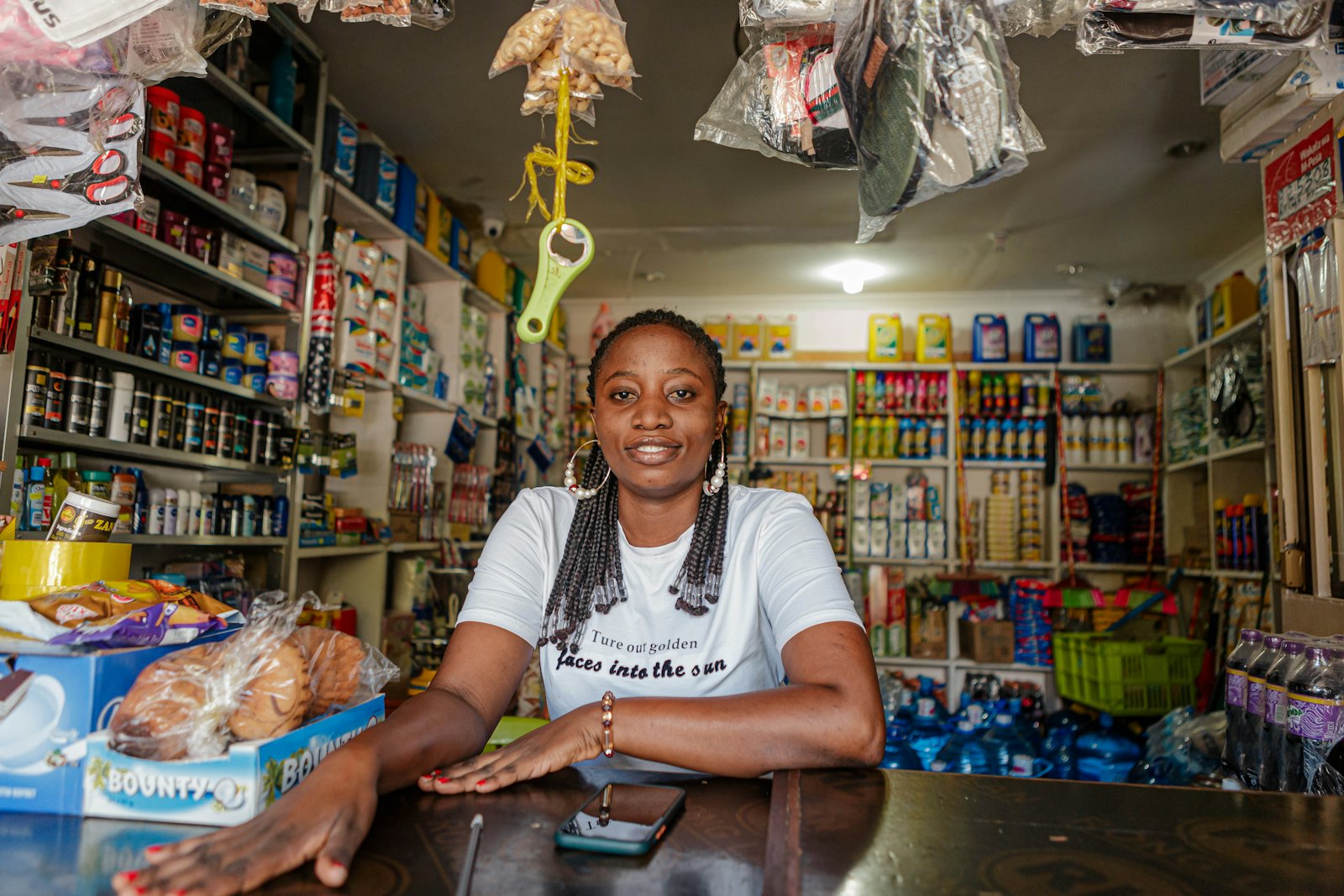
Thandi runs a catering business in Gqeberha with eight staff. Orders come in on WhatsApp. Quotes are typed in Word, saved as “Quote FINAL v3”, then emailed. The cash-up happens in a hardcover exercise book, and the only person who knows which clients still owe money is Thandi. When the power went off during a big corporate order last year, the card machine died and nobody could find the delivery address, because it was in a voice note. (Thandi is an illustrative example, but you probably know a business like hers. You might run one.)
Consultants would tell her she needs digital transformation for small business. That phrase usually arrives with slide decks, six-figure budgets and words nobody uses in real life. It doesn’t have to. For most South African SMMEs, digital transformation means moving one messy process at a time onto simple digital tools, so the business stops depending on memory, paper and luck.
This guide shows what that looks like in practice, what it costs, and how to do it without blowing the budget.
What digital transformation for small business actually means
Strip out the jargon and there are three levels:
- Digitise. Paper and memory become digital records. The exercise book becomes a spreadsheet or accounting app. Quotes come from a template.
- Connect. Those records talk to each other. An accepted quote becomes an invoice without retyping. Stock levels update when you make a sale.
- Transform. You use the data and tools to work differently: online ordering, better pricing decisions, new services, serving customers in other provinces.
Most small businesses get enormous value from levels one and two alone. Level three can wait. The first job is to stop losing money at level zero.
The South African reality check
Advice written for London or San Francisco often assumes cheap fibre, stable power and staff with laptops. Digital transformation in South Africa has to start from different facts.
Small businesses carry a big share of the economy
According to a TIPS special edition on the state of small business in South Africa, formal small businesses contributed 19% of GDP and 33% of employment in 2023, while the informal sector provided 17% of employment. Stats SA’s analysis of the informal economy counted 1.9 million South Africans running non-VAT-registered businesses in 2023, up from 1.5 million a decade earlier. Many of those owners run the whole business from a phone.
Connectivity is mostly mobile
ICASA’s State of the ICT Sector Report 2026 shows that 82.1% of households had internet access from some location in 2024, but only 17.4% had fixed internet at home. The same report puts 4G coverage at 99.5% of the population and prices a 2GB mobile data basket at R152 a month. The lesson for a small business: choose tools that work well on a phone and don’t eat data.
Power can’t be taken for granted
The CSIR’s utility-scale power statistics for 2024 recorded 6,948 hours of load-shedding in 2023, falling to 1,656 hours in 2024, with the last occurrence that year on 26 March 2024. The improvement is real. Still, a business that lost trading days in 2023 knows that any system should keep working, or at least keep your data safe, when the lights go out. Cloud storage, offline-capable apps and a charged power bank for the card machine are part of a sensible plan.
The benefits of digital transformation you can actually measure
The benefits of digital transformation show up in places you can count:
- Faster payment. Invoices sent the same day, with automatic reminders, bring cash in sooner.
- Fewer lost orders. A shared order list means nothing lives only in one person’s WhatsApp.
- Less rework. Information captured once, used many times.
- Owner time back. When staff can find answers themselves, you stop being the bottleneck.
- Funding readiness. Clean records make it easier to apply for finance or join enterprise and supplier development programmes.
- A business that can run without you for a week. This one is priceless.
Why smaller businesses have an advantage
Here’s some encouraging news. Transformations are hard for everyone. In McKinsey’s survey on unlocking success in digital transformations, only 16% of respondents said their digital transformation had improved performance and sustained those gains. Yet respondents at organisations with fewer than 100 employees were 2.7 times more likely to report a successful digital transformation than those at organisations with more than 50,000 employees.
That makes sense. You have fewer systems to untangle, fewer approvals and a shorter distance between deciding and doing. An eight-person team can change how it quotes on Monday and see the result by Friday.
A five-stage roadmap that won’t blow the budget
Work through these in order. Each stage should pay for itself before you move to the next.
| Stage | What it looks like | Budget level |
|---|---|---|
| 1. Diagnose | Find where time and money leak. Rank the problems. | Low |
| 2. Get the basics digital | Cloud accounting, shared files, quote and invoice templates, WhatsApp Business catalogue. | Low |
| 3. Connect the core | Link sales, invoicing and stock so data flows without retyping. | Low to medium |
| 4. Automate the repeats | Reminders, follow-ups and reports that run on their own. | Medium |
| 5. Track and improve | Dashboards and targets reviewed every week or month. | Medium |
For stage 3, our guide to building a connected small business tool stack explains how to choose tools that share data. For stage 4, see what business automation is and what to automate first.
An illustrative budget
Say Thandi sets a hard ceiling of R2,500 a month for technology. Data comes first: if five staff each need a 2GB bundle for work, ICASA’s R152 benchmark puts that at about R760 a month. That leaves roughly R1,740 for software. She starts with cloud accounting and shared storage, then adds one new tool per quarter only if the last one has earned its keep. If a tool saves her admin person four hours a week at R150 an hour, that’s about R2,600 a month in time, well above its cost.
Mistakes that blow the budget
- Buying before diagnosing. The shiny tool rarely solves the problem that’s actually costing you money.
- Too many disconnected apps. Five tools that don’t share data create data silos and more retyping.
- Skipping training. A tool nobody uses properly is an expensive subscription.
- Automating a broken process. Fix the steps first, then digitise them.
- No owner. Every system needs one person responsible for keeping it clean and current.
If you’re part of a corporate supplier or enterprise development programme, ask what support is included. Many programmes fund tools, training or advisory time, and good programmes track your progress. Our article on measuring ESD programme impact explains what those programmes look for.
Frequently asked questions
What does digital transformation mean for a small business?
For a small business, digital transformation means changing how work gets done using digital tools, one process at a time. It starts with moving paper and memory into shared digital records, then connecting those records so information flows, and eventually using the data to make better decisions and offer customers new ways to buy from you.
How much does digital transformation cost a South African SMME?
It can start with a few hundred Rand a month. Many small firms begin with tools they already have, such as a smartphone, WhatsApp Business, cloud storage and basic accounting software. Set a monthly ceiling, add one tool per quarter and only keep a tool if it saves more in time or earns more in sales than it costs.
Where should a small business start with digital transformation?
Start with the process that costs you the most money or time today, usually invoicing, quoting, stock or customer follow-up. Map how it works now, simplify it, then move it onto one digital tool. A business diagnostic helps you rank the options so you fix the biggest leak first instead of the most fashionable one.
How do load-shedding and data costs affect going digital in South Africa?
They shape which tools you choose. Pick software that works on a phone, saves offline and syncs when the connection returns. Keep key files in the cloud so a dead laptop doesn’t mean lost records. Budget for data per staff member, and prefer tools that use little bandwidth over heavy desktop systems.
Start with a clear diagnosis, then execute in steps
What Thandi needs is simple: to know which leak to fix first, and a way to keep the plan moving once the excitement wears off. B.E.T (Business Enabling Toolbox) starts with business diagnostics, then gives you step-by-step guidance, templates and tools, growth action plans and performance dashboards, plus peer performance comparisons so you can see how you stack up. When your plan grows into bigger goals with a team behind them, Edvysor turns strategy into tracked execution with KPI dashboards and team accountability.
Ready to take the first step? Explore B.E.T or contact Areeka Labs to find the right starting point for your business.